
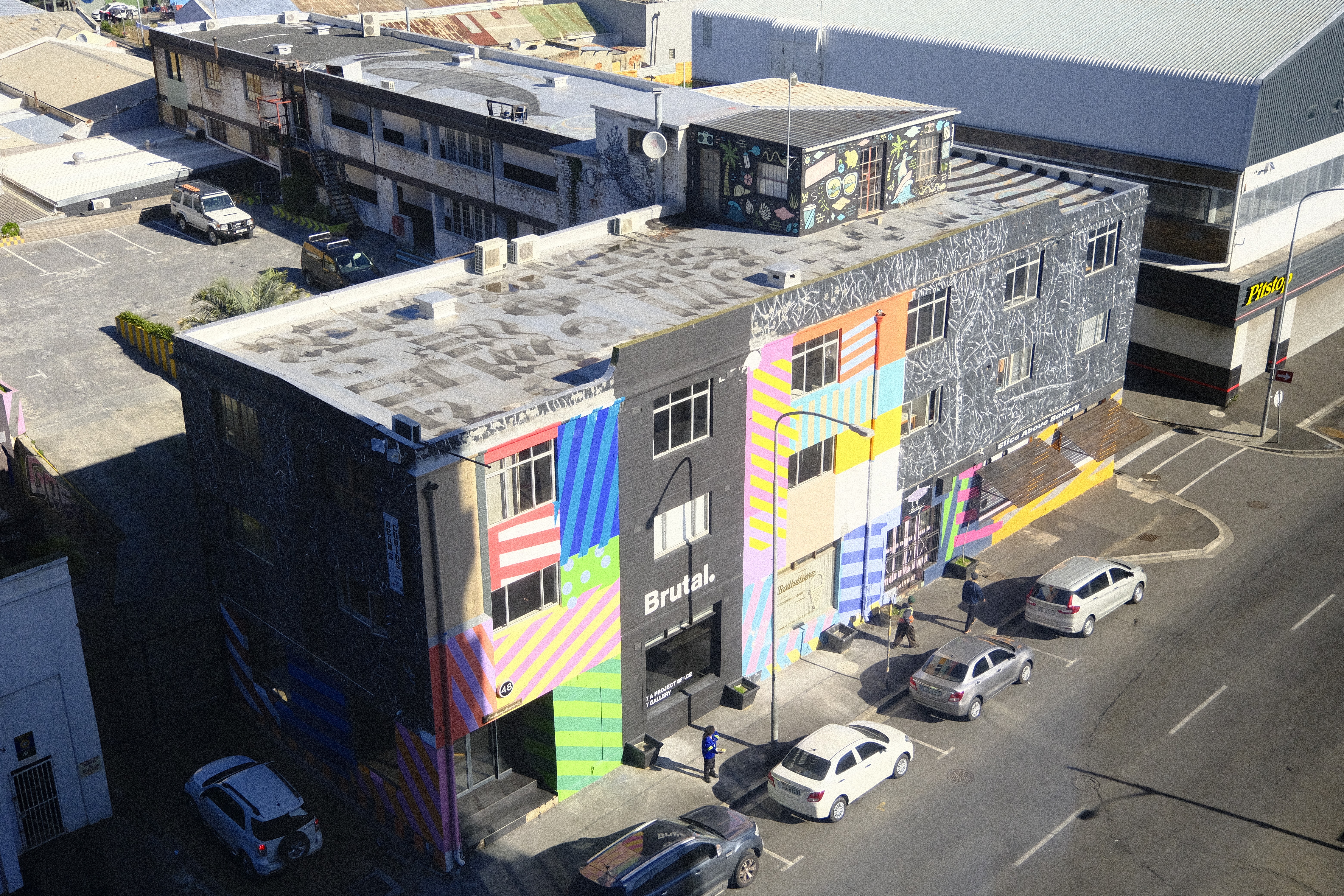
Growth pushes for a new tagline that "tests better." A designer joins with strong opinions about the logo. An agency runs a campaign that's technically on brief but somehow feels like a different company. Nobody made a bad decision in isolation but two years later your homepage, your ads, your sales deck and your social feel like they were made by four different businesses saying four different things. Nuance across channels is fine but when something feels fundamentally off, the fix isn't a brand refresh. It's a Brand OS.
Why it matters
In 2026, brands that haven't found a unique voice tend to disappear into the crowd. They might have ambitions to redefine a category but end up looking and sounding like everyone else in it. Authenticity is usually what separates the ones that break through and finding it can happen at different stages during the founding moment, a seed round or a pivot when a product has become commoditised. A Brand OS should exist from the start, even if it's never been written down. Sometimes the version that worked for one phase of the company is no longer true and it's usually internal tension disagreement about what the company is actually for: That signals it's time to define it properly.
What is a Brand OS?
Think of it as the guiding principles that form the personality of your brand. It's straightforward to build if you put the right thought into understanding the human truth underneath the product or service.
It has two parts.
Your brand thesis: what you believe, why you do what you do and how you do it.
and a verbal and visual communication system that carries that message to your audience. Not a static rulebook but a shared framework that helps every person on your team and every partner you work with understand what they're doing, how they're doing it and why it matters.
Most companies have neither. Some have fragments brand reviews, style guides, approval processes. But without the philosophy underneath, those processes are just enforcing taste rather than first principles. Without a Brand OS every new hire, agency or channel is making brand decisions from scratch or guessing at the purpose of the work. I've seen it happen and it can slowly erode confidence which makes teams unsure of the direction.
How to diagnose fragmentation
Understanding fragmentation is the first step to fixing it, and in my experience it almost always traces back to a missing or broken OS. A few common causes:
Speed without a reference point. Early-stage companies move fast and ship constantly. Without a shared system to reference, every decision defaults to whoever is in the room. The brand becomes an average of individual tastes over time and the original intent is lost to speed.
Leading with sales messages instead of truth. When brand decisions are driven by what converts this quarter rather than what's genuinely true about the company, the message drifts. You end up with positioning that performs in the short term but creates confusion over time because it's optimised for the moment rather than rooted in something true.
Channels channels everywhere. In 2026 your brand lives across more surfaces than ever: social, search, TV, radio, partners, OOH, Sales decks and your webite. Each new channel tempts you to adapt rather than extend. Adaptation done repeatedly without a governing system, is fragmentation and it happens far too often.
Treating brand as output, not input. Thinking of brand as the thing that comes out at the end: the logo, the website or a campaign. In reality, brand is an input the set of constraints that shapes every output. When it's treated as output it gets revisited constantly. When it's treated as a running OS, it stays stable enough, with variation that produces impactful communication without losing coherence.
Two ways to check your own
It's not always another refresh that's needed sometimes it's a tightening of what already exists. The missteps are the greatest learnings, if you let them be.
The brand sense-check. Collect ten pieces of branded collateral: a landing page, a social post, a sales deck, a customer email, a product screenshot. Strip the logo from each one. Hand them to someone outside the company. Ask: does this look like one business or several? Their answer is more reliable than yours because you've lost the ability to see your brand as an outsider does.
The friction audit. Walk your team through recent brand decisions that created tension, a campaign that didn't quite land, a design direction that got debated too long. Ask: why did it feel off? If different people give different answers, you don't have a shared OS. You have a shared logo.
Building your Brand OS
A cohesive brand in 2026 isn't about more guidelines. It's about fewer, sharper ones.
Why do you exist? This is the core of the system. A brand guide tells people what font to use. A brand thesis tells people what you believe, who you're for and what you're doing in the world. Everything else runs on top of it.
A good thesis has three parts: a genuine point of view on the world (not a mission statement), a defined audience with a specific emotional state you're trying to change and a tone specific enough to be exclusionary. If your tone can be described as "friendly, professional and approachable," it's too broad to function as an OS. It can't reject anything which means it can't govern anything.
How do you write briefs that extend the brand? A brief that extends the brand isn't a spec sheet; it's a translation of the thesis into direction. It answers: what do we want the audience to feel, not just know? What would be distinctly off-brand here? What's the one thing this piece of work needs to do? Briefs built this way give partners and teams enough to be creative without drifting.
Focus on what feels like truth and validate it. The best Brand OS work starts with something felt before it's articulated. Gather your founding team, your sharpest early customers and your most on-brand piece of work and ask what they have in common. That pattern is usually closer to your truth than anything written in a strategy doc. Then test it: does it hold up across channels? Does it give you a clear "no" as often as it gives you a "yes"? If it does, you've found something real.
Need help building a brand that holds together?
I work with teams and founders to create brands that are coherent from the inside out from the strategy that shapes it to the details that make it stick.